Why Deduction Management Matters

Retail deductions directly impact revenue, cash flow, profitability, and operational efficiency. Even when individual deductions seem manageable, the cumulative impact can be significant. High deduction volume can put pressure on A/R teams, increase write-offs, reduce visibility into true customer profitability, and tie up cash that could otherwise support growth initiatives.

The Financial Impact of Deduction Management

Deduction management is often viewed as an operational Accounts Receivable function, but its financial impact extends across the organization.

For many CPG companies, millions of dollars are tied up in open customer deductions, disputed chargebacks, aged claims, unresolved recovery efforts, and historical write-offs. Without a structured deduction management process, valid recovery opportunities can be overlooked, dispute deadlines can be missed, and unsupported deductions may ultimately be written off.

Poor deduction management can lead to:

  • Increased write-offs
  • Delayed cash recovery
  • Missed dispute deadlines
  • Duplicate or overlapping claims
  • Invalid customer deductions going unchallenged
  • Working capital constraints
  • Revenue leakage
  • Limited visibility into customer profitability
  • Reduced forecasting accuracy
  • Increased operational costs

Many organizations focus on deduction processing rather than deduction recovery. However, recovering invalid deductions, preventing recurring issues, and reducing avoidable write-offs can directly impact profitability and working capital.

Executive Benefits of Effective Deduction Management

A mature deduction management program can help improve:

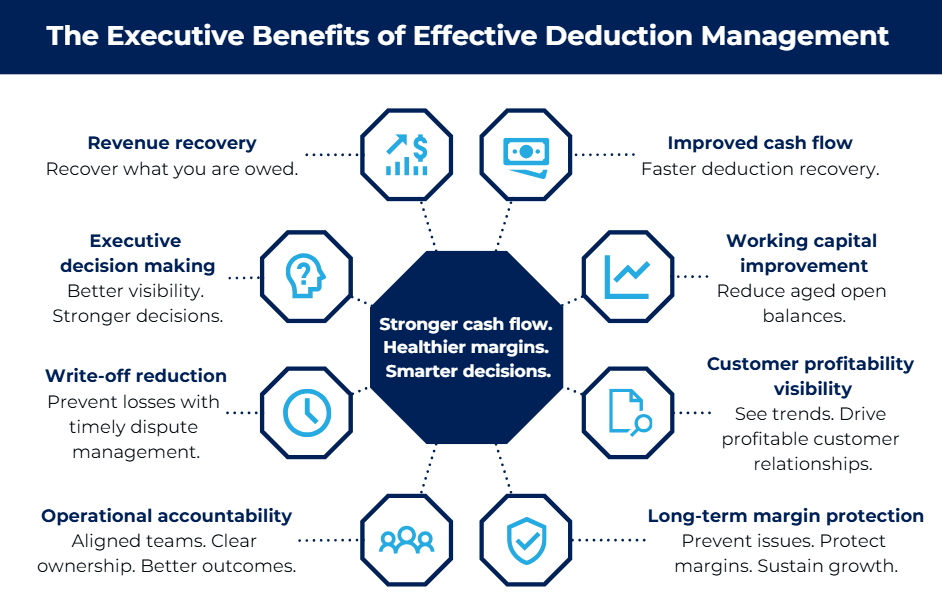
  • Cash flow through faster deduction recovery
  • Working capital through reduction of aged open balances
  • Revenue recovery from invalid deductions and customer errors
  • Write-off reduction through timely dispute management
  • Customer profitability visibility through deduction trend analysis
  • Operational accountability across Finance, Sales, Trade, Logistics, Compliance, and Customer Service
  • Executive decision-making through improved reporting and visibility
  • Long-term margin protection through prevention-focused root cause analysis
Infographic titled “The Executive Benefits of Effective Deduction Management” showing how improved deduction management leads to stronger cash flow, healthier margins, and smarter decisions. Key benefits include revenue recovery, improved cash flow, better executive decision-making, working capital improvement, reduced write-offs, customer profitability visibility, operational accountability, and long-term margin protection. Icons and callouts surround a central message highlighting these business outcomes.

Executive Insight: Deduction management should not be viewed solely as an A/R activity. It is a revenue protection and working capital management function that helps organizations recover cash, reduce financial risk, improve visibility into customer profitability, and prevent recurring losses.

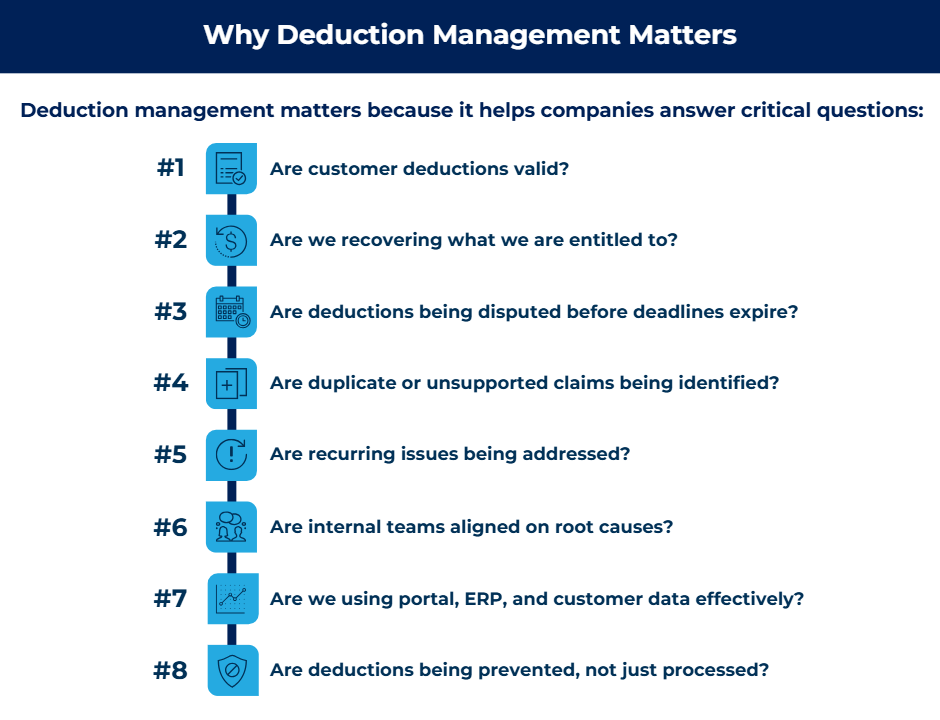
Deduction management matters because it helps companies answer critical questions:

  • Are customer deductions valid?
  • Are we recovering what we are entitled to?
  • Are deductions being disputed before deadlines expire?
  • Are duplicate or unsupported claims being identified?
  • Are recurring issues being addressed?
  • Are internal teams aligned on root causes?
  • Are we using portal, ERP, and customer data effectively?
  • Are deductions being prevented, not just processed?
Infographic titled 'Why Deduction Management Matters' showing eight key questions companies should answer through effective deduction management. Questions address claim validity, recovery opportunities, dispute timeliness, duplicate claims, recurring issues, root cause alignment, effective use of portal and ERP data, and prevention of future deductions. The information is presented as a numbered vertical checklist with corresponding icons.

Revenue Protection Mindset: Every unresolved deduction represents either a valid business cost, an internal process issue, a customer error, or a recovery opportunity. The role of deduction management is to determine which one applies.

Download our free, comprehensive Deduction Management Guide

Enter your email below to access 50+ pages of practical insights, best practices, recovery strategies, technology considerations, KPIs, and checklists for building a more effective deduction management program.

Get Started

Work with our professional, experienced and stable management team to fill your accounts receivable outsourcing needs.