What Good Deduction Management Looks Like

A strong deduction management program is:

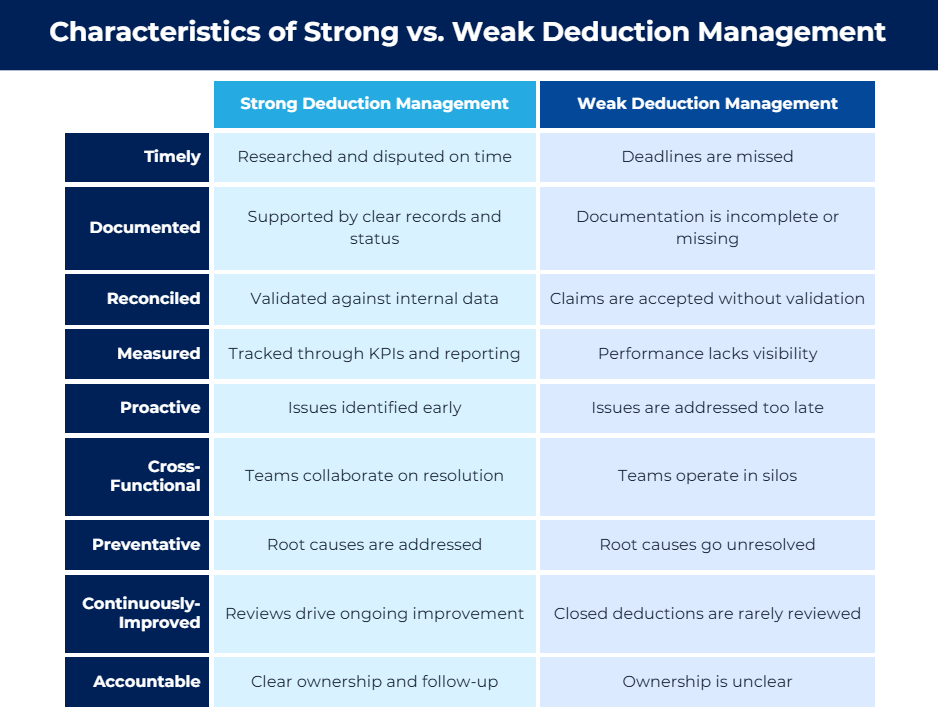
  • Timely: Deductions are identified, researched, and disputed before deadlines are missed.
  • Documented: Every deduction has clear support, status, and disposition.
  • Reconciled: Customer claims are validated against ERP and internal records.
  • Measured: KPIs show volume, aging, recovery, write-offs, and trends.
  • Proactive: Pending claims and recurring issues are monitored early.
  • Cross-Functional: Finance, Sales, Trade, Logistics, Compliance, Customer Service, and Shared Services work together to support timely resolution.
  • Preventive: Root cause analysis drives corrective action and reduces recurring deductions.
  • Continuously Improved: Closed deductions, post audits, and recurring issues are reviewed for additional opportunities.
  • Accountable: Every open deduction has a clear owner, next action, due date, SLA status, and responsible department.
Infographic titled “Characteristics of Strong vs. Weak Deduction Management” comparing effective and ineffective deduction management practices across nine areas: timeliness, documentation, reconciliation, measurement, proactivity, cross-functional collaboration, prevention, continuous improvement, and accountability. The chart contrasts strong practices such as timely disputes, clear documentation, KPI tracking, root-cause analysis, and ownership with weaker practices including missed deadlines, incomplete records, poor visibility, siloed teams, and unresolved root causes.

Download our free, comprehensive Deduction Management Guide

Enter your email below to access 50+ pages of practical insights, best practices, recovery strategies, technology considerations, KPIs, and checklists for building a more effective deduction management program.

Get Started

Work with our professional, experienced and stable management team to fill your accounts receivable outsourcing needs.