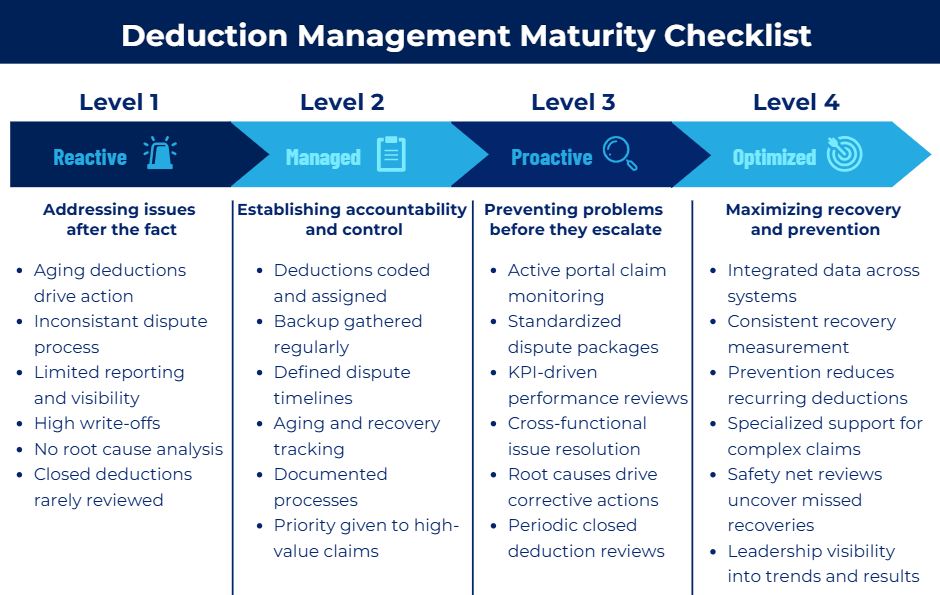
Deduction Management Maturity Checklist

Use this checklist to assess the current state of your deduction management program.

Level 1: Reactive

Your program may be reactive if:

  • Deductions are reviewed only after they age
  • Backup is difficult to locate
  • Disputes are submitted inconsistently
  • Write-offs are high
  • Reporting is limited
  • Root cause is not tracked
  • Portal monitoring is minimal
  • Closed deductions are rarely reviewed

Level 2: Managed

Your program may be managed if:

  • Deductions are coded and assigned
  • Backup is retrieved regularly
  • Disputes are submitted within defined timelines
  • Aging reports are reviewed
  • Recovery activity is tracked
  • Some root cause reporting exists
  • Processes are documented
  • High-dollar deductions receive priority

Level 3: Proactive

Your program may be proactive if:

  • Pending portal claims are monitored
  • Deductions are validated against ERP data
  • Dispute packages are standardized
  • KPIs are reviewed regularly
  • Cross-functional teams review recurring issues
  • Root causes drive prevention actions
  • SaaS or automation is used where helpful
  • Closed deduction reviews are performed periodically

Level 4: Optimized

Your program may be optimized if:

  • Deduction research is timely and well-controlled
  • Portal, ERP, pricing, trade, and shipment data are connected
  • Recovery performance is measured consistently
  • Prevention actions reduce repeat deductions
  • Shared Services teams have specialized support where needed
  • Safety Net Reviews identify missed recovery opportunities
  • Post-audit claims are validated thoroughly
  • Leadership has clear visibility into trends, exposure, and results
Infographic titled “Deduction Management Maturity Checklist” outlining four stages of deduction management maturity: Reactive, Managed, Proactive, and Optimized. Each level describes progressively stronger controls and processes, from addressing issues after the fact and managing aging deductions to standardized dispute handling, root cause analysis, cross-functional collaboration, integrated data, consistent recovery measurement, and proactive prevention of future deductions.

Download our free, comprehensive Deduction Management Guide

Enter your email below to access 50+ pages of practical insights, best practices, recovery strategies, technology considerations, KPIs, and checklists for building a more effective deduction management program.

Get Started

Work with our professional, experienced and stable management team to fill your accounts receivable outsourcing needs.